Why New Zealand's AI problem is a people problem, and what Zimbabwean skilled workers can learn from it
Tips · 2026-09-16 · 4 min read
There are two ways to read a report about artificial intelligence in New Zealand. Employers will see a warning about workforce strategy. Skilled workers in Harare or Bulawayo can read it another way: as a hint about which abilities could count as automation spreads. Here are both views.
The employer's view
A 2026 technology trends report on New Zealand found that 93% of AI spending in organisations goes to technology and just 7% to people and skills. For a country with an ageing workforce and regional labour shortages, the authors see a compounding disadvantage: firms buy capability faster than they build it. In a small, resource-constrained market, getting workforce and AI strategy wrong is not a minor stumble.
The report separates redesign from adoption. The age of experiments is over, and the advantage goes to organisations that rethink how work is done. Bolting a chatbot onto an existing process is "shallow adoption", and it is common: only around one in eight organisations worldwide has moved agentic AI into production.
The worker's view
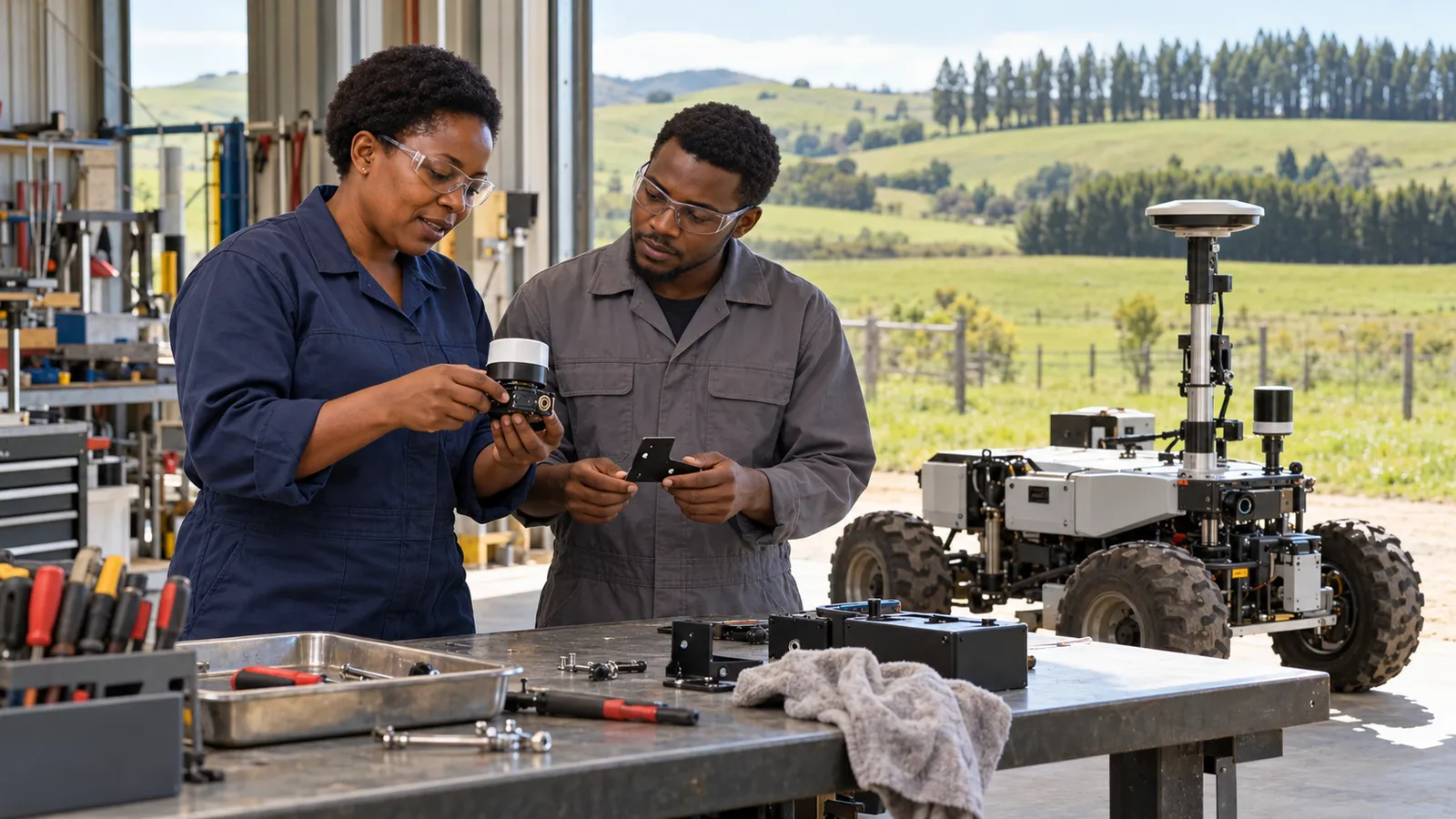
The same report describes a hybrid human and silicon workforce. Routine, repetitive and hazardous jobs shift to AI and robotics. People are pushed, or freed, towards roles that need judgment, creativity and technical depth. Sectors named include agriculture, utilities, infrastructure inspection and transport, where New Zealand's scattered population makes staffing difficult.
So what grows? Technical operators who manage and maintain autonomous systems rather than only using AI at a desk. Specialists in regional and infrastructure-heavy areas where drones, autonomous inspection and remote robotics are expanding fastest. And upskilled local workers, supported by international recruitment aimed at gaps that cannot be closed quickly enough.
Security as a shared concern
Employers and workers alike are exposed to a further problem: AI is making cyberattacks faster and more sophisticated. Automated tools help attackers run phishing campaigns and look for weaknesses quicker than human teams can respond. As aviation, healthcare and transport rely more on digital systems, thin or poorly trained teams carry more risk.
What you can do from Zimbabwe
Start with an honest inventory of your skills. A ZIMSEC result or a HEXCO certificate is a foundation, but it does not automatically equal a New Zealand licence, skills assessment or registration, and some trades require occupational registration. Next, gather proof of practical experience, such as machines run, systems maintained and projects completed. Then see how employers describe roles on our jobs page.
Your CV should lead with results. Build AI CV can help you structure one, and you can also introduce yourself by video with SelfIntroVideo. Our readers also ask about why New Zealand is winning back its own people, which shows the other side of the labour market.
If you need immigration advice, use a licensed immigration adviser or someone lawfully exempt from licensing for New Zealand, and an adviser on the MARA register for Australia.
A short example
Picture an electrician in Bulawayo who has spent years maintaining industrial equipment. The report does not say that New Zealand needs electricians from Zimbabwe, and it would be wrong to claim so. What it does suggest is that practical experience with systems that are becoming more automated could be worth describing carefully: what the equipment did, how it was monitored, what went wrong and how you fixed it. That kind of detail is what separates a CV that is read from one that is skipped.
Common mistakes to steer clear of
- Believing that an AI course alone makes you hireable.
- Describing duties instead of results.
- Mistaking a strategy report for a vacancy list.
- Paying anyone who claims to be able to arrange a job.
Frequently asked questions
What does the 93/7 split tell me?
That organisations spend far more on tools than on training their people.
Will AI remove demand for workers?
The report says demand will change shape rather than fall.
Do I need to be a programmer?
No. Technical operators and infrastructure specialists are among the roles it names.
Does New Zealand recruit overseas?
Targeted international recruitment is mentioned where local gaps cannot be closed fast enough.
Where can I read more on this theme?
Read what New Zealand's AI shake-up means for skilled migrants.
Key takeaways
- 93% of AI spend goes to technology, 7% to people and skills.
- Redesigning work beats buying more tools.
- Operators and regional specialists are the roles described.
- Local certificates do not automatically convert; check recognition for each role.
#people #ai #new zealand #zimbabwe #talent strategy #skills
 Zimbabwean professionals planning Australia: AI is changing which white-collar roles last
 Trade skills and Australia: four things Zimbabwean carpenters, plumbers and electricians should settle first
 Applied in May or June for a July start? What Zimbabwean students should do now about New Zealand