Harvest season, visa queues and a fast lane: how Australia's farm fix reads from Zimbabwe
News · 2026-09-26 · 4 min read
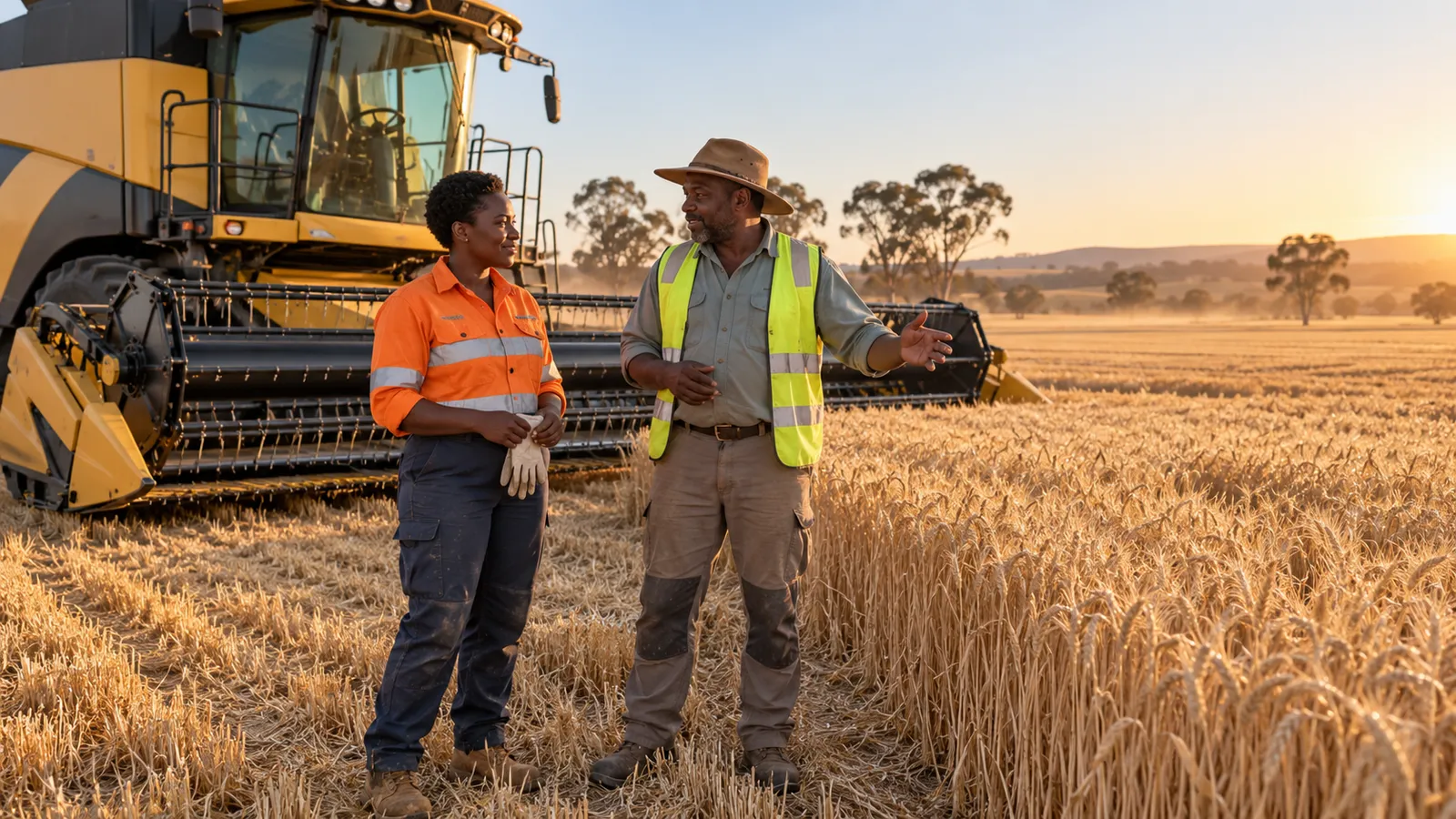
Australian farmers have one eye on the weather and the other on visa queues. In the weeks before harvest, the government has given them a tool that is modest but concrete: a way for industry bodies to push urgent farm labour cases to the front of the line. For readers in Harare and Bulawayo, the useful question is how to read it sensibly.
The pressure in brief
Australia sits among the top global suppliers of wheat, barley and canola, and its harvest depends on a workforce that swells each season with temporary migrants, many of them on working holiday maker visas. When Canberra said it would trim annual migration by tens of thousands, employers saw fewer visas being processed just as the paddocks needed people. Waits for working holiday visas had, industry voices said, already grown from days to several months.
A caution for Zimbabwean readers: working holiday visas are linked to arrangements with specific countries, so please do not build plans around one. We write about the story because it explains how Australia handles seasonal labour.
The fix, and its limits
| Element | What it means |
|---|---|
| Who nominates | Industry bodies flag urgent cases |
| Who decides priority | The Department of Home Affairs |
| Who is targeted | Applicants with a documented agricultural job offer and a start date within a three-month window |
| What stays | The three-month processing ceiling and tighter extension limits |
This was announced in late September 2026, and the arrangement is expected to run through the national farmers' federation. Growers welcomed it but admitted to unanswered questions: how it will work in practice, what volume it can absorb, and whether priority really means faster approval. As one reading goes, it is a triage lane, not a change of direction.
Why the details matter
The structure rewards preparation. A documented offer and a firm start date are what open the lane, and that is true of most Australian work applications. If you are a farm worker, driver or mechanic in Zimbabwe thinking about Australian roles, keep your ZIMSEC results, trade papers and work letters in order. A polished English CV helps too, and Build AI CV is one way to prepare it.
For harvest and seasonal context, Seasonal Jobs Australia shows how such work is described. On this site, read what skilled workers should know about the migration debate and browse the jobs page.
What growers want next
Farmers are not asking for sympathy, only for certainty. They want to know that a worker with an offer in hand and a date to start can actually arrive before the crop is gone. Until the first urgent applications have moved through, nobody can say whether the new lane delivers that. For people following from Zimbabwe, the sensible stance is interest without assumptions: watch how the arrangement performs, and base any personal plan on the official pages that apply to your own situation.
It also helps to separate employer need from applicant eligibility. A farm may badly want workers, and an industry body may be willing to nominate a case, yet each applicant still has to meet the rules of the visa itself. Wanting a worker and being allowed to hire one are two different questions.
Common mistakes with headline visa news
- Mistaking a narrow fix for a general easing.
- Hoping a nomination can be arranged for any applicant. It concerns documented, urgent cases.
- Buying promises of speed from unregistered helpers. For Australian visa advice, look for a migration agent on the MARA register.
- Ignoring the next harvest cycle's timing when planning documents.
Frequently asked questions
Is there a blanket exemption for farms?
No. It is a referral pathway for specific urgent cases.
What is the three-month window?
The arrangement targets applicants whose documented job offer has a start date within three months.
Does this help applicants from Zimbabwe directly?
It is described around industry nominations and documented offers, and working holiday visas are not something to plan around. Treat it as background on Australian policy.
Could rules change again?
Yes. Settings shift often, so check official pages.
Why are growers cautious?
Because it is untested, and priority may only mean a different queue.
Key takeaways
- Industry bodies can nominate urgent farm labour cases, and Home Affairs prioritises them.
- The broader settings, including the processing ceiling, are unchanged.
- Documents and a firm start date are central.
- Use official information and a MARA-listed migration agent for advice.
#harvest #visa lane #australia #farm labour #zimbabwe
 From campus to career: why overseas graduates in Australia often land lower-skilled roles, and what Zimbabweans can do
 Admin, coding, copywriting, data: how AI redundancies in Australia affect Zimbabwean applicants
 What a proposed abolition of Australia's graduate visa could mean for Zimbabwean students