Data centres, homes and clean energy all want the same tradespeople: a guide for Zimbabwean electricians
News · 2026-09-05 · 4 min read
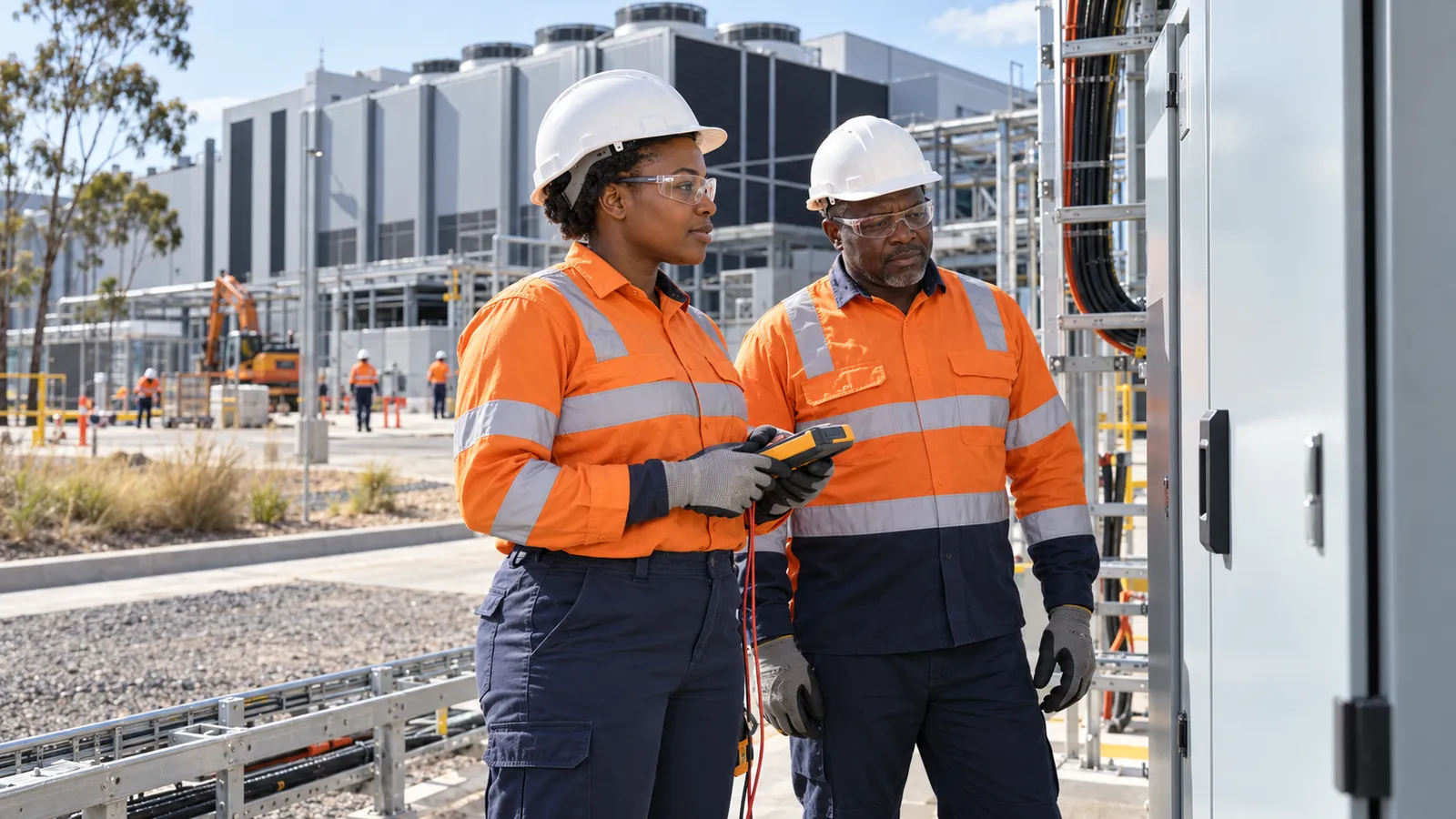
Australia has set itself three huge construction goals at once, and there are not enough electricians and energy trades workers to deliver them. For electricians in Harare, Bulawayo or elsewhere in Zimbabwe, that is both an encouraging story and one that needs careful reading.
The shortfall in brief
A new report from an industry skills body finds that Australia needs roughly 72,000 additional electricians, technicians and related tradespeople by 2030, up from the 42,000 forecast a year earlier. Data centres account for much of the rise. Their construction pipeline is projected at around $150 billion by 2030 on Treasury figures. With more than 160 operating and another 130 planned, the sector alone is expected to need an extra 13,000 energy trades workers. The Housing Accord's target of 1.2 million new homes and the clean energy transition draw on the same workers.
Why employers are under strain
Pay has become the battleground. Employers are outbid, apprentices are poached before they finish, and small contractors, who do much of the training, lose experienced staff to data centre projects offering pay and conditions they cannot match. Apprenticeship completion is a solid 70%, yet not fast enough, and industry bodies are asking for hiring quotas on large projects and compensation for small firms that lose trained workers.
Why overseas tradespeople might care
If the domestic pipeline cannot keep up, employers look outward. Possible advantages include:
- Sustained demand rather than a short spike.
- Multiple entry points across data centres, housing and renewables.
- Regional and project-based roles, often outside the capital cities where competition for visas and jobs can be lighter.
- Employers who have a financial reason to consider skilled visa pathways.
That is not a promise of a job or a visa, and every advert states its own terms.
Four developments to follow
- Workforce guidelines for data centre developers, which Canberra has pushed since March.
- Occupation list updates, which a shortage like this may feed.
- Training incentives such as the $10,000 clean energy apprenticeship incentive, which could later reach recognised overseas qualifications or bridging programmes.
- Regional project sites that may match regional skilled visa streams. All of these matter over the next 12–18 months.
Preparing from Zimbabwe
A HEXCO certificate shows your training, but a local qualification is never an automatic match for an Australian licence, skills assessment or registration, and some electrical work needs a state licence. RPLDirect explains how skills assessment works for Australia. Keep references, tickets and site records tidy, and if a police clearance is requested it comes from the Criminal Record Office. Present your history on a clear CV: Build AI CV can help. For more, read why Canberra needs bricklayers so badly and why the tradie shortage is a skilled migration opportunity, then browse the jobs page.
It is worth being honest about the competition. Higher pay on data centre projects shows how strong demand is, but it also means experienced local electricians have options. Overseas applicants stand out through documented skill: employer letters describing the installations you worked on, whether commercial, industrial or solar, and dated evidence of your years on site. Collect those letters now, while former supervisors are easy to reach, and keep copies in a form you can send quickly.
Common mistakes among Zimbabwean electricians
- Believing that a national shortage turns into a personal visa.
- Waiting until a job offer to find out about assessment.
- Letting references and certificates fall out of date.
- Taking advice from anyone other than a migration agent registered with MARA.
Frequently asked questions
How big is the forecast gap?
Roughly 72,000 additional workers by 2030.
What is driving the increase?
Mostly data centre construction, alongside housing and clean energy.
Will my HEXCO certificate be recognised?
It shows your training, but assessment and licensing are separate steps.
Are there incentives for training?
An existing $10,000 clean energy apprenticeship incentive shows government willingness to fund workforce growth.
Where can I find current roles?
On the jobs page, where every advert states its own conditions.
Key takeaways
- Australia needs roughly 72,000 more electricians and related workers by 2030.
- Three national priorities compete for the same people.
- Qualification assessment is a separate step from job demand.
- Prepare documents and watch policy for the next 12–18 months.
#electrical trades #australia #trades shortage #data centres #zimbabwe #skilled migration
 Is Australia's talent shortage real? What the hiring data says for skilled people in Zimbabwe
 Will Australian migration tighten? A calm reading for skilled workers in Zimbabwe
 Myth or fact: will a housing-based migration cap shut the door on skilled Zimbabweans?