Australia needs welders yet lacks confirmed work: what Zimbabwean tradespeople should make of it
Tips · 2026-09-30 · 4 min read
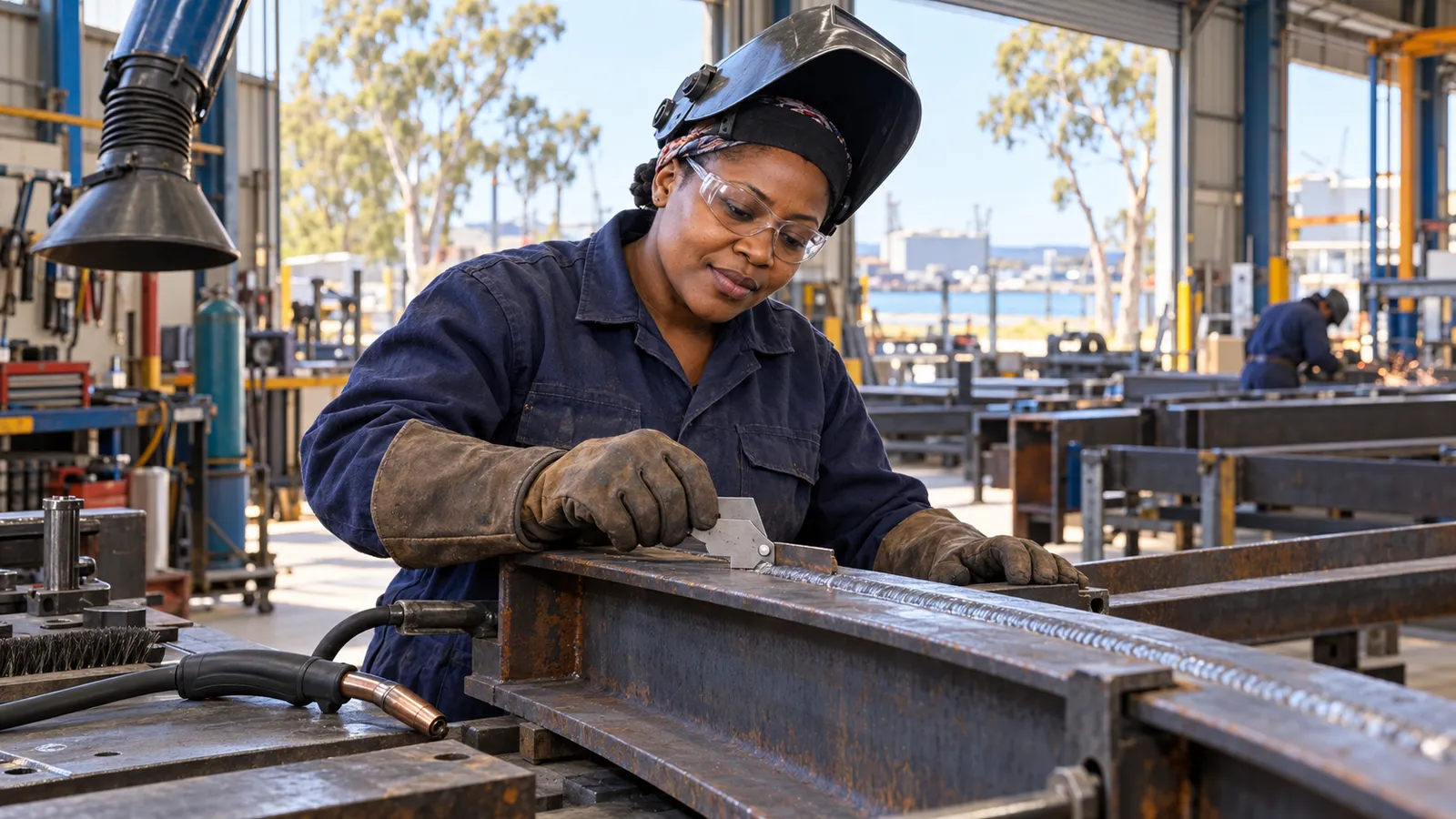
Here is a paradox worth understanding. Australia's fabrication industry says it does not have enough qualified welders, and in the same survey many workshops say they cannot see enough work. For welders and boilermakers in Harare or Bulawayo who are thinking about Australia, resolving that puzzle is the first step.
Two truths at once
Truth one: 89.2 per cent of respondents said the country lacks enough qualified welders for coming infrastructure and defence work. Truth two: six in ten respondents had three months or less of confirmed work, one in five had no confirmed pipeline, and almost 60 per cent of fabrication workshops ran below 75 per cent capacity. The way these fit together is a mismatch. Businesses named a lack of work and a lack of skilled staff as reasons. Industry leaders say local firms are not short of capability, only of access to projects.
Why projects go elsewhere
Compliance is a sore point. About 71.4 per cent of respondents said imported fabricated products at least sometimes fail to meet Australian standards, and 53.6 per cent said it happens often or very often. The industry therefore wants stronger local content in public projects, independent verification of fabricated steel wherever it is made, backing for a proposed national fabrication authority, help for small and medium-sized firms to adopt advanced manufacturing technology, and contract decisions that weigh whole-of-life value, not only the cheapest upfront price.
Pressure and investment
| Measure | Share of respondents |
|---|---|
| Higher energy prices | 82.1 per cent |
| Higher material costs | 78.5 per cent |
| Raised selling prices | 28.5 per cent |
| Invested more in staff training | 42.8 per cent |
| Invested more in research and development | 39.2 per cent |
Nearly 40 per cent saw gross profit margins fall, yet half of respondents increased technology investment.
What it means for a Zimbabwean welder
Demand for skill looks long-term, because defence, infrastructure and renewable energy work takes years. Standards matter, so employers should value workers who can show experience with them; keep welding test records and employer references together with your HEXCO certificate, which is evidence of training but not automatically an Australian licence. Training is part of the system: the sector wants apprenticeships, pre-apprenticeship programmes, TAFE pathways and industry-led training, and some migrants may find further training useful for skills assessment or licensing. Finally, 79.5 per cent felt welding is not respected as it should be, and the industry wants to change that.
Put your experience into a strong English CV; Build AI CV can help. To understand recognition of skills, visit RPLDirect. On this site, see the construction skills crisis, what the bricklayer story means for skilled migrants and the jobs page.
Practical steps from Harare or Bulawayo
Start by listing every workshop or site you have worked on, with dates, the materials you welded and the standards you worked to. Ask former supervisors for short letters while they can still be found. Add photographs of finished work if you have them, and note any inspection or test results. Then write a one-page summary in plain English. It will help with a CV, an assessment and any conversation with an adviser, and it costs nothing but time.
Common mistakes that trip people up
- Concluding that a shortage settles your visa position. Skilled visa rules and occupation lists change often.
- Skipping the check of current Skills in Demand visa settings and skills assessment rules on the Department of Home Affairs website.
- Hiding gaps in your work history instead of explaining them.
- Paying advisers who are not on the MARA register for Australian migration advice.
Frequently asked questions
Why would a country short of welders have idle capacity?
Because the survey describes a mismatch between confirmed projects and qualified people.
Is this a visa announcement?
No. It is industry survey evidence, not a change to visa rules.
Could better local content rules change demand?
The industry thinks so, and if pipelines grow, demand for skilled, standards-compliant tradespeople could rise.
Should I upgrade my training?
It may help for skills assessment or licensing, depending on your trade.
Key takeaways
- Australia reports both a shortage of qualified welders and a shortage of confirmed work.
- Compliance and documented standards matter to employers.
- Training and assessment may be part of the path.
- A shortage is not a visa, so verify current rules.
#welding #fabrication #paradox #australia #boilermakers
 Trade skills and Australia: four things Zimbabwean carpenters, plumbers and electricians should settle first
 Zimbabwean professionals planning Australia: AI is changing which white-collar roles last
 Why New Zealand's AI problem is a people problem, and what Zimbabwean skilled workers can learn from it